More Skills
More Data

By
Maximilian Vogel
September 9, 2026
/
2 min.
AI gives us the average
The first AI-generated image felt like magic. The twentieth often feels strange, or even cold.
AI can produce polished visuals, animations and ideas at absurd speed. But it works from patterns it already knows. Unless someone pushes it elsewhere, it tends to return to the probable: familiar compositions, familiar language, familiar beauty.
Technically impressive. Creatively safe.
The problem is no longer getting a result. It is recognising which result has a pulse.
Reject, repeat, recycle
Creative work has never come from accepting the first answer. Artists, designers, architects and filmmakers love variations, reject most of them and keep pushing until something unexpected appears.
Andy Warhol showed the world how to turn the ordinary into the extraordinary. The object was simple. What made it remarkable was his decision to isolate it, repeat it and place it in a gallery.
AI can accelerate this process dramatically. I can explore ten directions where I might once have explored only two. I can test an idea before I have fully committed to it, compare versions and follow strange accidents that would otherwise have disappeared.
But producing more options does not automatically produce better work. It creates more to choose from.
When making becomes easy, choosing becomes the work.

Language interface
I increasingly stop operating the computer.
Instead of opening the right software, searching through folders and clicking through menus, I can describe what I want to achieve. AI connects the tools, handles code and starts executing the process.
Language is becoming the interface. Software dissolves into reality.
It feels surprisingly close to the future imagined in Star Trek. The replicator created objects on command. The Holodeck created entire worlds. What once looked like distant science fiction is beginning to feel like a product roadmap.
We are not inside the Holodeck yet. But the basic interaction has arrived: describe something, and the computer starts building it.
That changes my role. I spend less time telling software exactly what to do and more time thinking about what I actually want to create. The bottleneck is shifting from execution to intention.
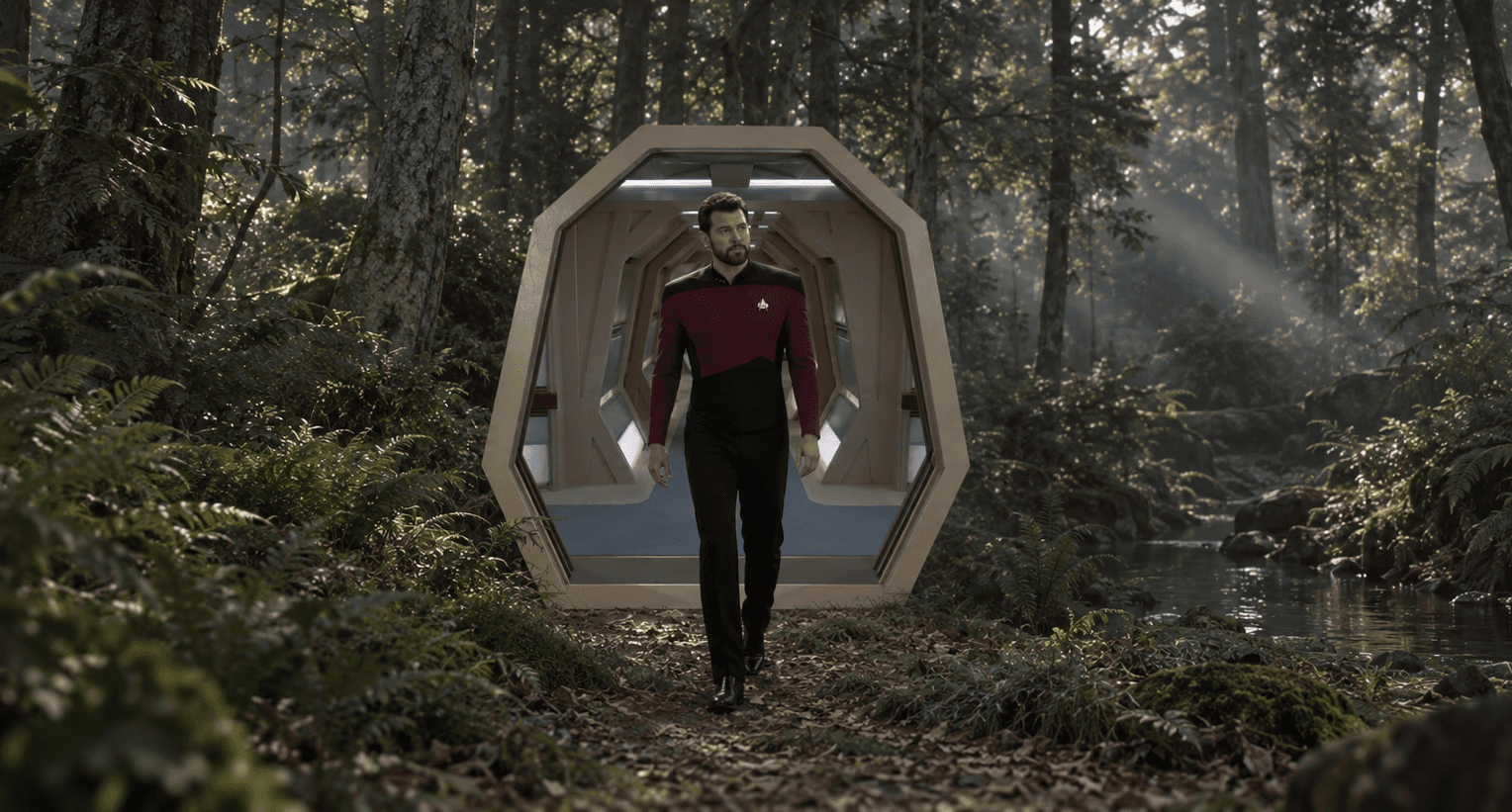
The computer is not the crew
A computer can generate ten worlds before lunch. It cannot reliably tell me which one matters. It does not know when a mistake is worth keeping or when an idea needs to be pushed somewhere less comfortable.
Someone still has to ask the right question, recognise the promising direction and reject the average answer. That takes taste, experience, intuition and a connection to life outside the machine.
AI gives us enormous creative power. It shortens the distance between thought and form, but that power comes at a cost. The energy and resources it consumes are already becoming a real limit to how fast this new world can develop.
The computer can build almost anything we describe. The real creative skill is knowing what is worth building – at least, that’s how it is in the real world, which still exists beyond numbers.
BLACKLYNK. Human Intelligence Beats Average.
Courtesy / References
Andy Warhol – Campbell’s Soup Cans, 1962
Reimagined with AIStar Trek, Reimagined with AI
Moderat – MORE D4TA, Reimagined with AI
Album: MORE D4TA, Moderat, 2022.
Recommended track for this article: NEON RATS, Listen on SpotifyHermes Agent – Nous Research
Open-source AI agent by Nous Research.


